


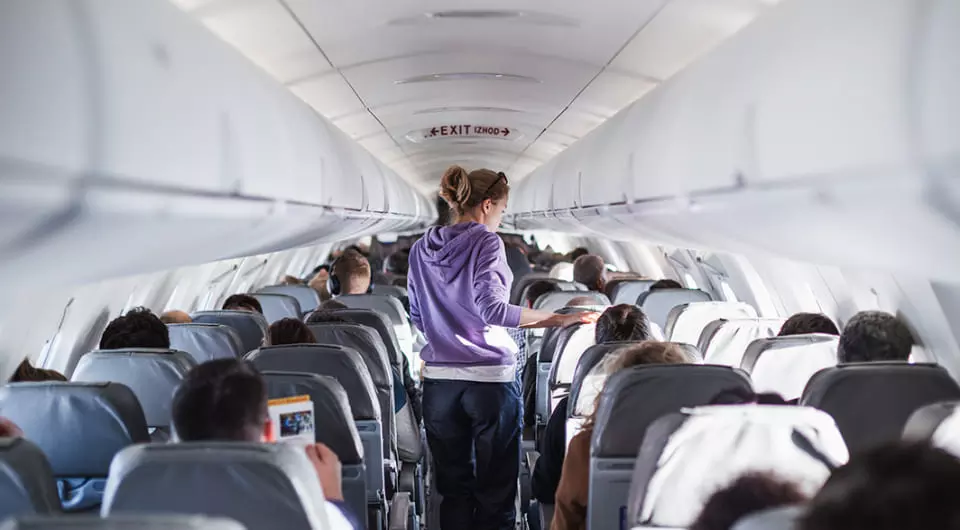
Volunteer on Board: How to Handle In-flight Medical Emergencies
 No CME/CPD credits |
  1 hour |
  16 Apr 2027
Overview
About
Commercial air travel is one of the most convenient and safest modes of transportation. However, the aircraft cabin environment presents unique conditions which can give rise to unexpected health challenges. As commercial air travel becomes more widely available in Hong Kong, the number of passengers—including those with pre-existing medical issues—continues to increase. Consequently, the likelihood of in-flight medical emergencies causing potentially life-threatening situations is expected to rise.
While airline cabin crew receive training in first aid and cardiopulmonary resuscitation (CPR), certain onboard medical emergencies may require the assistance of healthcare professionals. In these circumstances, medical volunteers can play a significant role in helping manage an in‑flight medical emergency (IME). Their involvement may include conducting a clinical assessment, assisting with treatment, and working closely with the cabin crew to support passenger safety. For this reason, healthcare professionals who travel frequently should enhance their readiness by familiarizing themselves with common in-flight medical emergencies and reviewing the onboard medical equipment available.
In-flight medical emergencies during commercial travel occur in a highly constrained environment. Factors such as limited medical supplies, restricted space, and the absence of advanced diagnostic tools present barriers to thorough assessment and treatment. Medical volunteers must therefore rely on rapid clinical judgment, focused history-taking, and basic physical examination skills. The management of in-flight medical emergencies should then follow a structured approach, prioritizing stabilizing the ill passenger, ensuring overall safety, and supporting the cabin crew with operational decisions.
This module emphasizes the crucial role of healthcare professionals in responding to in-flight medical emergencies. By reviewing common onboard medical emergencies, familiarizing oneself with the available onboard resources, and applying a structured approach, medical volunteers can improve their preparedness and contribute to safer travel for all passengers.
Learning outcomes
Upon completion of this module, learners should be able to:
- Describe in-flight medical emergencies (IMEs), their prevalence, and factors influencing their occurrence.
- Identify available onboard medical equipment during flight.
- Apply a structured approach to responding to IMEs, including pre-response considerations, aircraft diversion decisions, and medicolegal responsibilities.
- Assess and manages the most common in-flight medical emergencies effectively within the limitations of the cabin environment.
Topics covered
- Introduction to In-flight Medical Emergencies
- Onboard Medical Equipment
- Responding to In-flight Medical Emergencies
- Managing Common In-flight Medical Emergencies
Speaker:

Dr. John Gilbert Alpaño, MD, MPM, FPCEM
Fellow, Philippine College of Emergency Medicine
Emergency Medical Services Coordinator, Department of Emergency Medicine,
Quirino Memorial Medical Center
Keywords: in-flight medical emergencies, in-flight medical event, IME, onboard medical emergencies, in-flight medical emergencies during commercial travel, management of in-flight medical emergencies