


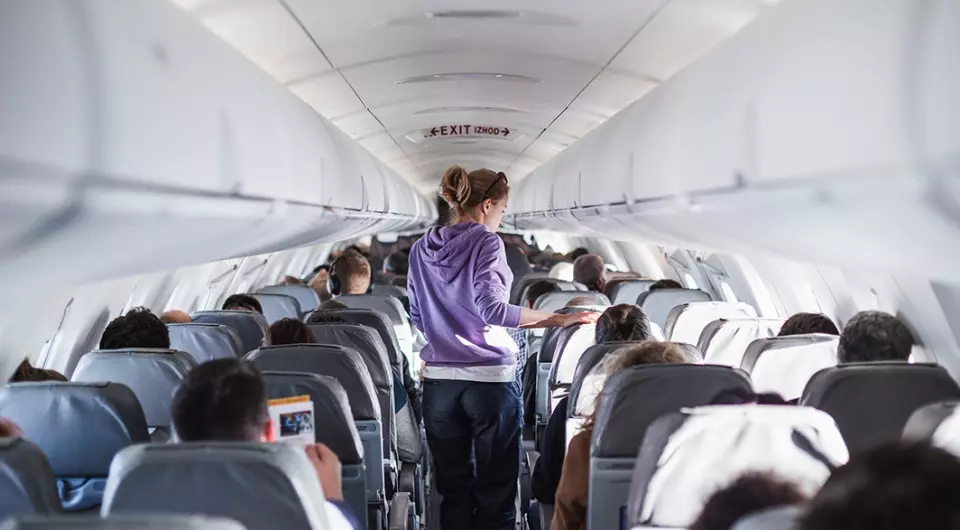
Volunteer on Board: How to Handle In-flight Medical Emergencies
 Duration of Webinar
 Pre-registration Start - End Date & Time
Event Start - End Date & Time
Quiz Expiry Date & Time
Pre-registration Start - End Date & Time
Event Start - End Date & Time
Quiz Expiry Date & TimeOverview
About
Commercial air travel is widely recognized as one of the most convenient and safest modes of transportation. However, the aircraft cabin environment presents unique conditions that may occasionally lead to unexpected medical events. With the growth of commercial air travel in the Philippines, passenger numbers continue to increase, including those with pre-existing medical conditions. Accordingly, the likelihood of in-flight medical emergencies developing into potentially life-threatening situations is expected to rise.
Although cabin crew are trained in first aid and cardiopulmonary resuscitation (CPR), onboard medical emergencies often benefit from the expertise of healthcare professionals traveling as passengers. Medical volunteers who assist during an in-flight medical event (IME) can provide valuable support by helping assess the patient, guiding initial management, and collaborating with cabin crew to maintain passenger safety. For this reason, healthcare professionals who travel frequently should enhance their readiness by familiarizing themselves with common in-flight medical emergencies and reviewing the onboard medical equipment available.
In-flight medical emergencies during commercial travel occur in a highly constrained environment. Factors such as limited medical supplies, confined space, and the lack of advanced diagnostic tools can make comprehensive assessment and treatment challenging. Healthcare professionals responding as medical volunteers must therefore rely on rapid clinical judgment, focused history-taking, and basic physical examination skills. The management of in-flight medical emergencies should follow a structured approach, with priority given to stabilizing the affected passenger, ensuring overall safety, and assisting the cabin crew in operational decision-making.
This module aims to strengthen healthcare professionals’ confidence and ability to recognize and manage in-flight medical emergencies while traveling. By reviewing common onboard medical emergencies, familiarizing themselves with available onboard resources, and following a structured approach, medical volunteers can be better prepared to respond effectively and support passenger safety.
Learning outcomes
Upon completion of this webinar, learners should be able to:
- Describe in-flight medical emergencies (IMEs), their prevalence, and factors influencing their occurrence.
- Identify available onboard medical equipment during flight.
- Apply a structured approach to responding to IMEs, including pre-response considerations, aircraft diversion decisions, and medicolegal responsibilities.
- Assess and manage the most common in-flight medical emergencies effectively within the limitations of the cabin environment.
Topics covered
- Introduction to In-flight Medical Emergencies
- Onboard Medical Equipment
- Responding to In-flight Medical Emergencies
- Managing Common In-flight Medical Emergencies
Speaker

Dr. John Gilbert Alpaño, MD, MPM, FPCEM
Fellow, Philippine College of Emergency Medicine
Emergency Medical Services Coordinator, Department of Emergency Medicine,
Quirino Memorial Medical Center
Follow all required steps to earn CME accreditation — join the webinar until the end and pass the assessment. Participants can access the quiz page within 3 days after the webinar to complete the assessment.
Keywords: in-flight medical emergencies, in-flight medical event, IME, onboard medical emergencies, in-flight medical emergencies during commercial travel, management of in-flight medical emergencies
Add to calendar


